
The Story Behind Tormint: From a Back Patio to a Garage Full of Silver
I was a stacker before I was a pourer. Like a lot of people, I bought silver because it made sense to me, and then it sat in a safe where nobody could see it.
That's really where Tormint started. Not with a business plan — with the thought that a stack of plain bullion in a box is a boring way to own something this good-looking. You wouldn't buy a Rembrandt and keep it in a drawer. Silver can be art. It just usually isn't.
It Started as a Hobby on a Back Patio
My first pour was a basic graphite pour on my back patio. Nothing fancy. Just molten silver, a graphite mold, and figuring it out.
From there it went to sand casting, which opened up actual designs instead of plain bars. About a year after that I learned investment casting — lost wax — and that changed what was possible. Suddenly you could capture fur, teeth, undercuts, real three-dimensional forms. Detail that a mold physically can't release any other way.
Each step took a while, and none of it was quick. Casting silver is a craft where you learn most of it by ruining things first.
Where the Name Comes From
Tormint is Torment and a coin mint, put together.
It fits the work — skulls, beasts, the darker end of the design spectrum. But it's also just true. We are all Torminted in some way. Everyone's carrying something. That's the part of the name that matters to me, and it's why the pieces lean where they lean.
The Garage
The patio only lasted so long. I moved into the garage as soon as I could make room, and eventually the garage stopped being a garage. It's a dedicated shop now.
Getting there meant a major electrical upgrade — you can't run casting equipment on standard household circuits — and putting real money into top-of-the-line equipment rather than making do. Both of those were bets on the thing being serious.
I'm coming up on five years now, and I still run all of it myself. Every design, every pour, every piece of finishing, every order that goes out the door. And the honest state of things: I need a bigger building.
The Moment That Stuck
My very first art bar release sold out.
I still think about that one. It's easy to talk yourself out of something when it's just you in a garage wondering whether anyone else cares about what you're making. Watching a first release actually sell out answered that question in a way nothing else could have.
That's what I come back to in the slower stretches. Every business has them, and this one is no exception. But somebody wanted that first piece, and somebody wanted the ones after it, and that's enough to keep the kiln running.
Why Art Instead of Bullion
There's easier money in plain rounds. Less design work, less finishing, less that can go wrong in a pour.
But art pieces are what drew me in, and they're what I want to make. A statue on a shelf is something you look at every day. A bar in a safe is something you check on. Both have their place — I'm not going to tell you a stack is a bad idea, I started as a stacker. It's just not the part I find interesting.
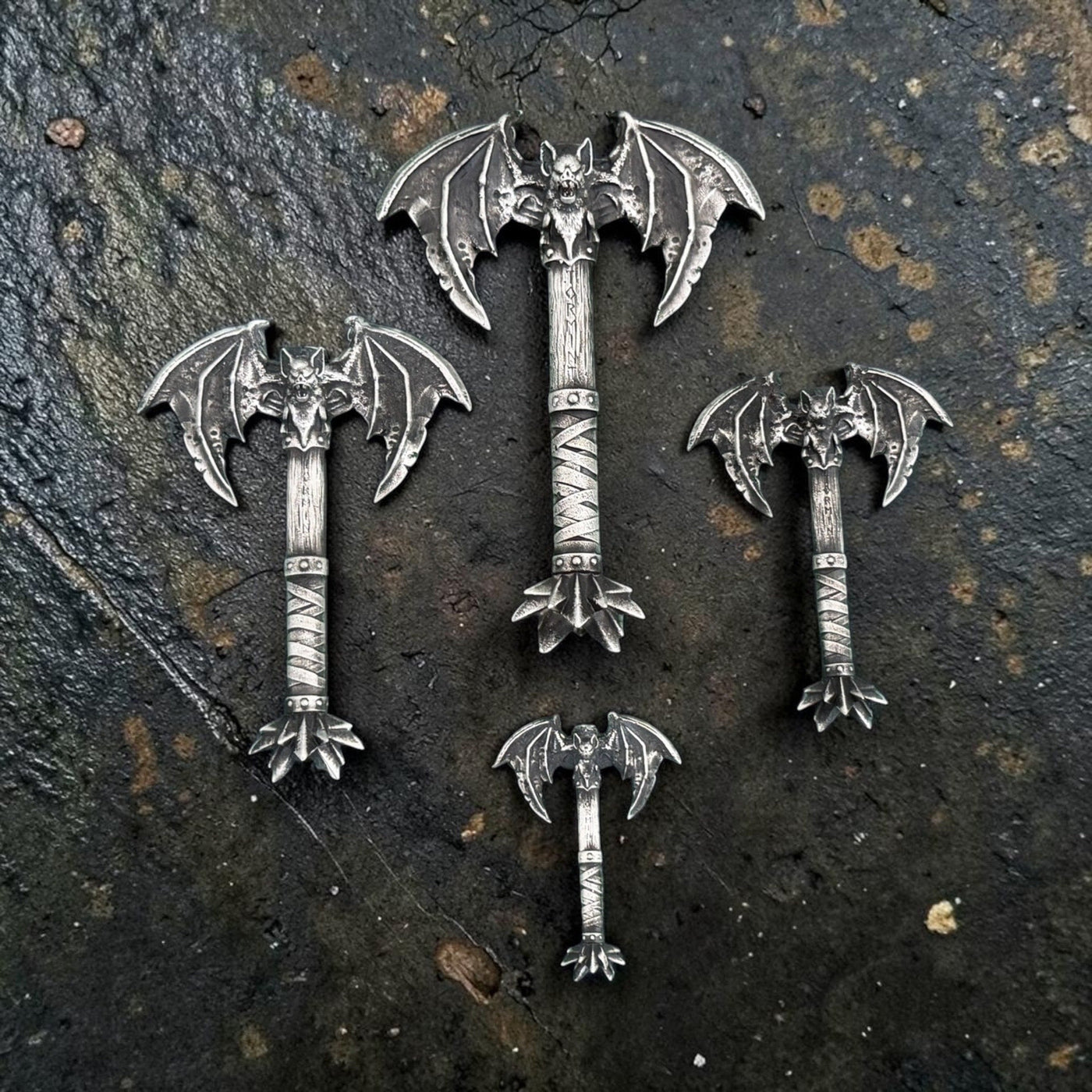
Every piece that leaves here is hand-poured in .999 fine silver, engraved with its fineness and serial number, and made in a capped mintage. When a run is gone, it's gone. That's not a marketing angle. It's just the only way I know how to do this that feels right.
Tormint is a one-man operation run out of a garage, making .999 fine silver statues, bars, and rounds. See what's available →