
Lost Wax Casting: How Hand-Poured Silver Pieces Are Actually Made
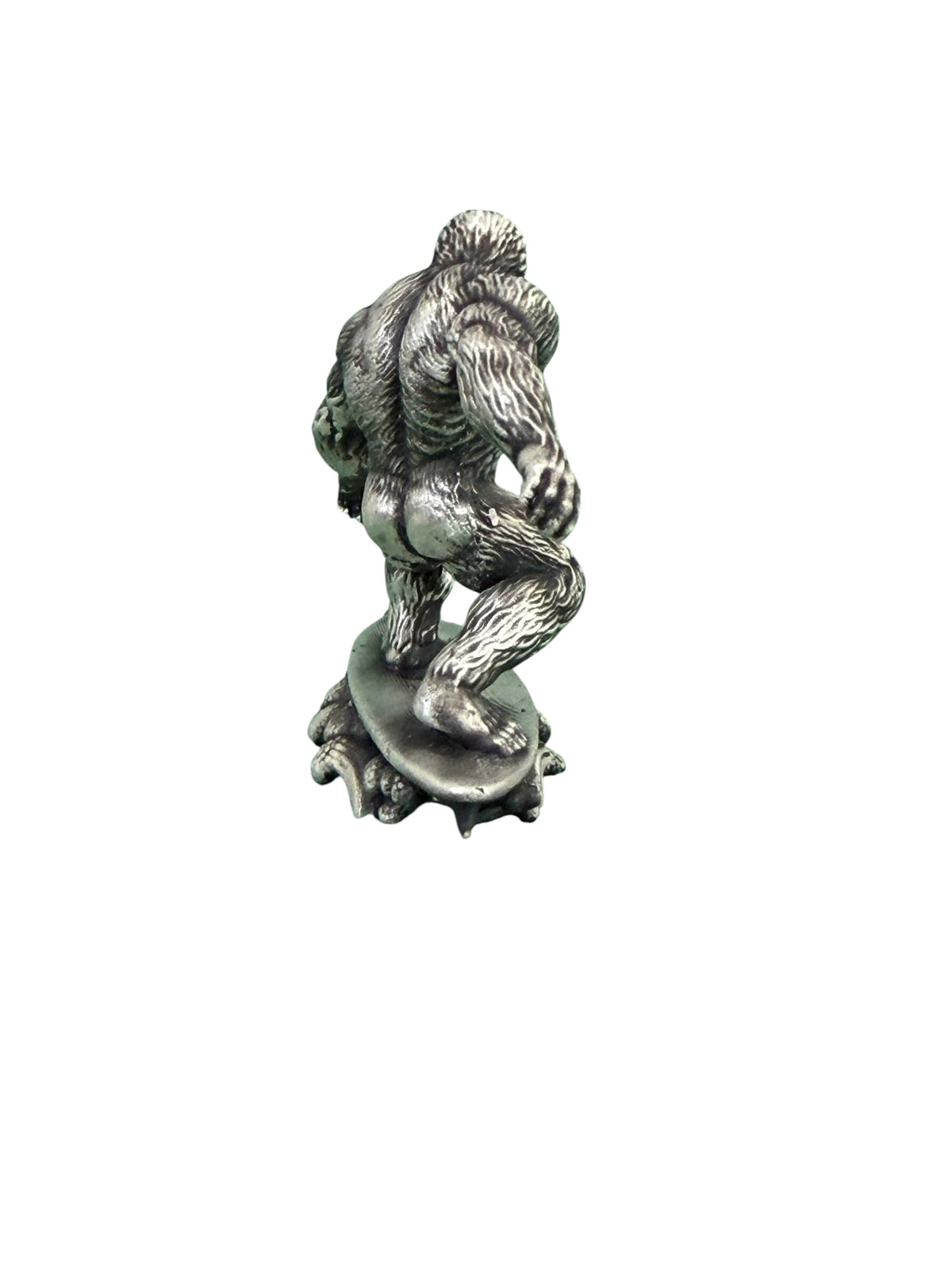
"Hand-poured" gets used loosely in the silver world. It can mean anything from molten metal ladled into an open mold to a fully sculpted, multi-stage casting process. If you're paying a premium over spot for a piece, it's worth knowing which one you're actually buying — and why the process changes what the finished piece looks like.
What Lost Wax Casting Actually Is
Lost wax investment casting is a method that's been around for thousands of years, and the fundamentals haven't changed much. It runs roughly like this:
- The original - A master model of the design is sculpted, either by hand or digitally and then printed.
- The mold - A flexible mold is made from that master, so the design can be reproduced.
- The wax - Molten wax is injected into that mold, producing a wax copy of the piece. Every single item cast starts as one of these.
- The investment - The wax copy is encased in a plaster-like ceramic slurry called investment, which hardens around it.
- Burnout - The whole thing goes into a kiln. The wax melts and runs out — this is the "lost" part — leaving a hollow cavity shaped exactly like the original.
- The pour - Molten .999 fine silver is poured or vacuum-drawn into that cavity.
- The break-out - Once cooled, the investment is broken away. It's destroyed in the process, so a new one is needed for every single piece.
- Finishing - Sprues are cut off, surfaces are cleaned and finished, and the fineness and serial number are engraved.
Why It Produces Better Detail
Because the silver is filling a cavity left by an exact wax copy, it picks up whatever the original had — individual strands of fur, teeth, fabric folds, undercuts that a two-part mold physically couldn't release. Detail that would be lost in a simpler process survives.
It also allows genuine three-dimensional forms. A piece can have limbs away from the body, negative space, and an actual back side, rather than being a flat relief with a detailed front.
Why It Costs More
The investment mold is single-use. Every piece requires a fresh wax, a fresh investment, a fresh burnout cycle, and a fresh pour. Nothing about the process gets faster with volume the way stamping does — the hundredth piece takes about as long as the first.
Add hand-finishing and engraving on each one, and you get the premium. It's labor, not markup.
Sand Casting: The Other Method
Some pieces are sand cast instead — a design is pressed into fine bonded sand to form a cavity, and silver is poured in. It's a rougher, more immediate process, and it leaves a distinctive textured surface that a lot of collectors specifically want.
Sand casting can't hold the same fine detail, and because each mold is packed by hand, no two pieces come out quite identical. Weights vary slightly. For some designs that variation is a flaw; for others it's the whole appeal. Neither method is better in the abstract — they suit different pieces.
What This Means When You're Buying
Look at the back of a piece, not just the front. A photo of only the front view often means there isn't much back to show. Ask about the method, and ask whether weights vary — an honest answer of "yes, plus or minus a couple tenths of an ounce" tells you it's genuinely cast rather than machine-struck.
And expect a premium over spot on anything cast this way. If a piece with real sculptural detail is priced near melt, something in that story doesn't add up.
Tormint pieces are cast in .999 fine silver using both lost wax investment casting and sand casting, depending on the design — each one finished, serialized, and shipped with a certificate of authenticity. Browse the collection →