
How to Care For and Store Silver Collectibles
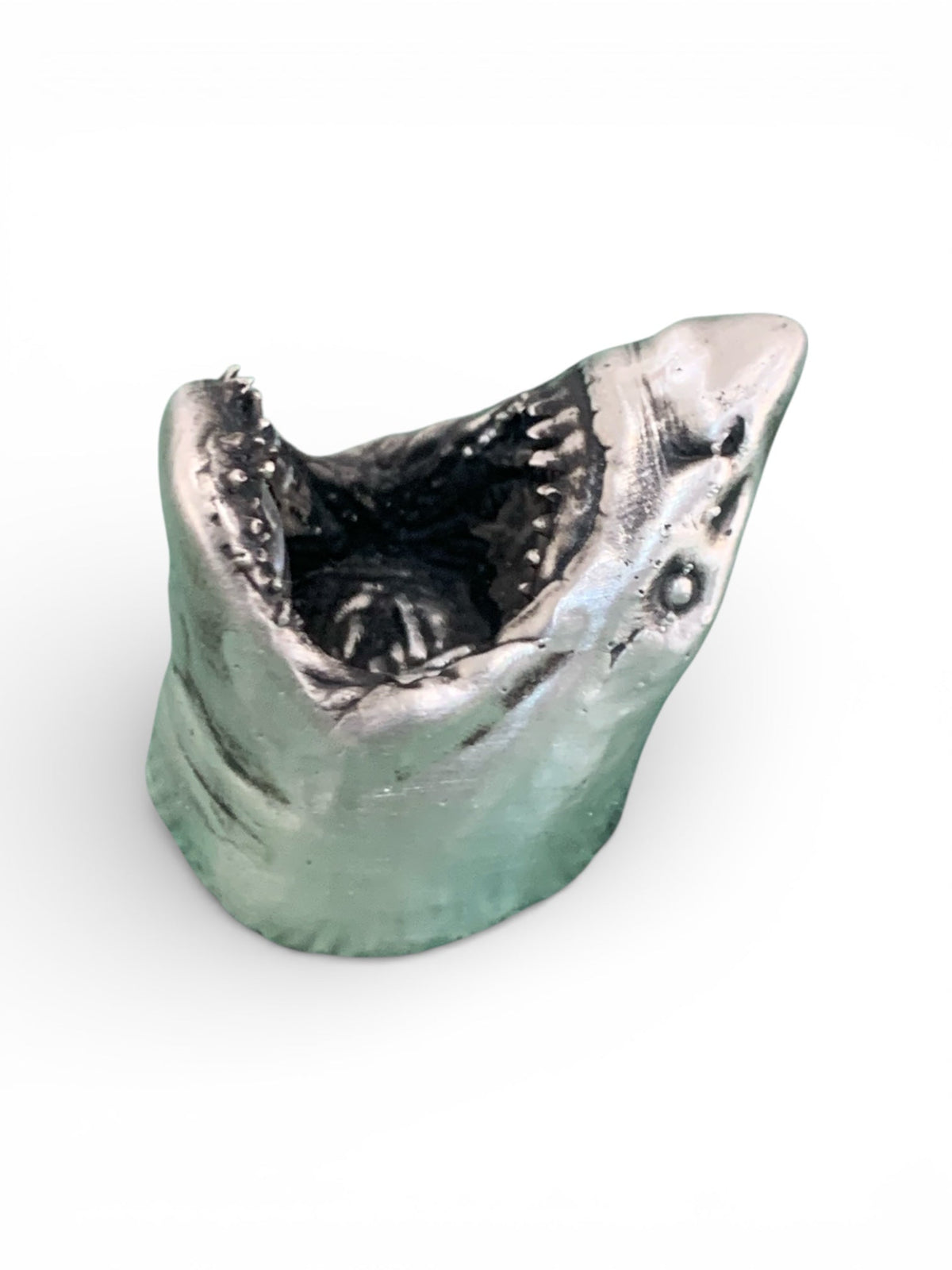
Silver tarnishes. That's not a defect, a sign of low purity, or something you did wrong — it's a chemical reaction that happens to every silver object eventually. What you can control is how fast it happens, and what you do about it when it does.
What Tarnish Actually Is
Tarnish is silver sulfide, formed when silver reacts with sulfur compounds in the air. It starts as a faint yellow cast, moves through gold and brown, and eventually goes blue-black.
Two things worth understanding: it's a surface reaction only — the silver underneath is unchanged — and it happens faster in humidity, heat, and air with more sulfur in it. That's why a piece sitting in a bathroom tarnishes faster than the same piece in a closet.
Prevention Beats Cleaning
Every cleaning removes a microscopic layer of metal along with the tarnish. Do it enough times and you soften the fine detail that made the piece worth buying. So the goal is to slow tarnish down, not to get good at reversing it.
Store it airtight. Zip bags designed for coins, or airtight capsules, cut off most of the air exchange. This is the single highest-impact thing you can do.
Add anti-tarnish strips. These absorb sulfur compounds from inside a sealed container. They're cheap and they work. Replace them every six months or so.
Control humidity. Silica gel packs in the storage container help. A safe or drawer in a climate-controlled part of the house beats a garage, attic, or basement.
Keep it away from rubber, wool, felt, and newspaper. All of these off-gas sulfur. Rubber bands are especially bad — they'll etch a visible line into a piece.
Handling
Skin oils and salts accelerate tarnish and leave fingerprints that develop over time into permanent marks. Handle pieces by the edges, or wear cotton or nitrile gloves for anything you care about.
If you're photographing or showing a piece often, that handling adds up. It's worth having gloves nearby rather than deciding case by case.
If You Do Clean It
First, consider not cleaning it. Some collectors prefer natural toning, and an antique or deliberately patinated finish is supposed to be dark — cleaning it strips the finish the maker applied and can't easily be undone.
If you decide to proceed on a bright-finish piece:
- Start with the gentlest option — warm water, a drop of mild dish soap, a soft microfiber cloth, then dry completely.
- Avoid abrasive polishes and dips on detailed cast pieces. Dips strip aggressively and pool in recesses; abrasives round off the fine detail in crevices, which is exactly where the craftsmanship lives.
- Never use toothpaste, baking soda paste, or any household scrubbing method on a collectible. They work by abrasion.
- Test anything new on an inconspicuous area first.
For a valuable or heavily toned piece, ask a dealer before doing anything. Improper cleaning has destroyed more collector value than tarnish ever has.
Keep the Paperwork With the Piece
Store the certificate of authenticity in the same place as the item it belongs to. Separated paperwork is the most common avoidable hit to resale value — a serialized piece without its matching COA sells for measurably less.
Every Tormint piece is hand-poured in .999 fine silver, laser-engraved with its fineness and serial number, and ships with a certificate of authenticity. Browse the collection →